
The past couple of times we have looked at Matthew 23 we have looked at the hypocrisy of the Scribes and Pharisees. This week we look at their blindness and answer the question, “What does Jesus mean when He says that they are blind?”
Before we go further though, let’s pray.
Matthew 23:16-22
16 “Woe to you, blind guides, who say, ‘If anyone swears by the temple, it is nothing, but if anyone swears by the gold of the temple, he is bound by his oath.’ 17 You blind fools! For which is greater, the gold or the temple that has made the gold sacred? 18 And you say, ‘If anyone swears by the altar, it is nothing, but if anyone swears by the gift that is on the altar, he is bound by his oath.’ 19 You blind men! For which is greater, the gift or the altar that makes the gift sacred? 20 So whoever swears by the altar swears by it and by everything on it. 21 And whoever swears by the temple swears by it and by him who dwells in it. 22 And whoever swears by heaven swears by the throne of God and by him who sits upon it.
Blind Guides
So this phrase “blind guides” is more than a funny comment. It is a testimony to current state of their relationship to God. They are blind. I think we can all agree that a blind person as your spiritual guide will lead you into all kinds of trouble.

A blind man was describing his favorite sport, parachuting. When asked how this was accomplished, he said that things were all done for him: “I am placed in the door with my seeing eye dog and told when to jump. My hand is placed on my release ring for me and out I go with the dog.” “But how do you know when you are going to land?” he was asked. “I have a very keen sense of smell, and I can smell the trees and grass when I am 300 feet from the ground” he answered. “But how do you know when to lift your legs for the final arrival on the ground?” he was again asked. He quickly answered: “Oh, the dog’s leash goes slack.” best-funny-jokes.com
So the problem Jesus is pointing out is not one of just hypocrisy, but of the fact that these people don’t even have a clue. They are in the dark, they are completely oblivious, they are blind to the truth that is literally all around them. To push home His point, Jesus uses an example that is completely integral to everything in the life of a Jewish person. The Temple.
The Temple

In the most basic sense, the Temple is where the presence of God rested on Earth. When you really think about that…it really isn’t basic at all. In the days of Adam and Eve, God walked among them. In a sense, the garden of Eden was the temple, and Adam was the tender or priest of the garden temple. When they were banished from the garden, Cherubim stood outside the garden and cut them off from the place where God dwelled. God made the first sacrifice because of sin in the killing of the animals for the skins that would cloth Adam and Eve. From then on, the institution of sacrifice and the separation of God from the general populace began.

Now there is so much symbolism, we can’t possibly go into it all this morning. But just think about the cherubim and the fact that they were positioned outside of the Garden of Eden. They guarded this place where God dwelled from Adam and Eve. In the Holy of Holies, cherubim were both on the curtains of the Holy of Holies, as well as being on the Ark of the Covenant with wings spread over the Mercy Seat, which is where it is said that the presence of the Lord would dwell. Much of the positioning of the Temple related to the positioning of the Garden of Eden and you really should read and look at some of the illustrations in the book Rose Guide to The Temple by Randall Price, ThM, PhD. It is fascinating. You can, and many have dedicated their lives to realizing the depth of symbolism seen throughout the temple and how it relates to our relationship to God. However, we don’t have time for that, so we will just briefly look at the history of the Temple.

In Moses’ time, God dwelled in the Tent of Meeting.
Exodus 33:7-11
7 Now Moses used to take the tent and pitch it outside the camp, far off from the camp, and he called it the tent of meeting. And everyone who sought the Lord would go out to the tent of meeting, which was outside the camp. 8 Whenever Moses went out to the tent, all the people would rise up, and each would stand at his tent door, and watch Moses until he had gone into the tent. 9 When Moses entered the tent, the pillar of cloud would descend and stand at the entrance of the tent, and the Lord would speak with Moses. 10 And when all the people saw the pillar of cloud standing at the entrance of the tent, all the people would rise up and worship, each at his tent door. 11 Thus the Lord used to speak to Moses face to face, as a man speaks to his friend. When Moses turned again into the camp, his assistant Joshua the son of Nun, a young man, would not depart from the tent.

From that point on the tent of meeting or the Tabernacle was constructed according to God’s design in Exodus chapter 35. That Tabernacle would form the basis for religious sacrifice for the Israelite people from that point on. And without sacrifice, the people of Israel, as symbolized by the High Priest could not enter the presence of God.
In King David’s day, David began the accumulation of materials for the permanent structure. David even purchased the the site where the temple was to be built, the threshing floor of Araunah the Jebusite, on Mount Moriah. If Mt. Moriah sounds familiar to anyone, this the the same mountain where Abraham went to sacrifice his son Isaac. So, Abraham and David both made an altar on this Mount and made sacrifices. Abraham’s sacrifice demonstrated his great faith in God. In David’s case, the sacrifice on the altar was made because of David’s sins, which had resulted in the deaths of 70,000 people from Dan to Beersheba. This is the site that then became the site for Solomon’s construction of the Temple.
Solomon’s splendid Temple had a chequered history of neglect, plunder (King Shishak of Egypt captured some of its treasures during the reign of Solomon’s son, Rehoboam), misuse (King Manasseh reintroduced pagan practices and ‘built altars to all the starry hosts’ - 2 Kings 21:4-5) and looting and destruction under the Assyrian King Nebuchadrezzar in 587 BC. The Ark of the Covenant disappeared at the time of exile, and was never recovered or replaced.” (Backhouse 2004:8)
Later on King Zerubbabel and the High Priest Joshua rebuilt the temple. Some of the Israelites counted this as a success by those who had not known the other temple, and an occasion for weeping by those who had seen The Temple that Solomon had constructed. The construction of this temple after the exile shows the importance of the Israelite people. It was part of their national sovereignty. You see, without the Temple, their nation was incomplete.
The Temple, in Jesus’ day was the Herodian Temple. Herod was not liked by the Israelite people. One thing that Herod did, possibly in an attempt to placate the people, possibly from his feeling of importance, or just the desire to build, as he created many wonders in the ancient world, including one of the largest fortresses ever built for the protection of one man (he was a paranoid, probably schizophrenic maniac, but more on that at a later date…) This was the biggest of the temples to be built. (Backhouse 2004:8)
This temple, as with the other temples was built on top of the site Abraham and David were shown by God. The Threshing floor, (according to Jewish tradition) was where the “Rock of Sacrifice”, or the “Foundation Stone” was. This was the supposed rock where Abraham went to sacrifice Isaac. Or according to some Jewish traditions, this was where the Jews believed the center of the world, and the point from which God created Adam was located. (Price 2012:31) Interestingly, in Islam instead of it being where Isaac was sacrificed it is where Abraham went to sacrifice Ishmael. It was also the supposed place where Mohammed ascended to heaven and is now the location for the Dome of the Rock.
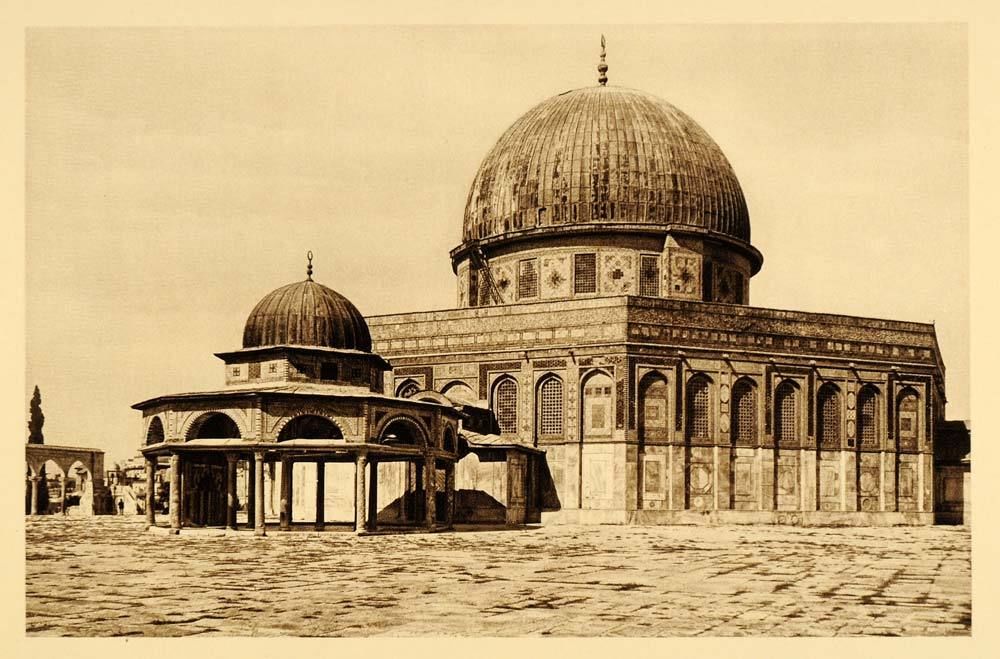
This rock was located where the Holy of Holies was eventually built. This was the place where God’s name chose to dwell. Understanding this better has given me a much more personal appreciation for the unease felt by the Israeli and Palestinian people who venerate this location as one of their most holy places.
The Temple was not only an important thing in the life of the Jewish people, it was central. It was a place where legal matters were settled, it was a place for the cycle of festivals, it was a place for annual pilgrimages, it was a place for sacrifice, it was a place for reading and study of the Torah, it was a symbol of national sovereignty, it was where they appealed to God for blessing, it served as a focal point for prayer, it was the center of where they believed blessing would fall on the whole world, for the Jewish person, it was literally the center of the Universe. (Price 2012:39)
It was also an important place for Jesus. It was a place where he got lost as a child. It was probably a place where Jesus went three times a year for the great feasts of Passover, Pentecost and Tabernacles. It is likely that the Gospel writers recorded around fourteen separate occasions where Jesus visited the temple in his short three year ministry. (Backhouse 2004:23) In fact at the beginning of the next chapter it says
Matthew 24:1
Jesus left the temple and was going away, when his disciples came to point out to him the buildings of the temple.
So during this whole message Jesus is in the Temple. These Scribes and Pharisees are in the presence of the Temple, this place where every pillar, every basin of water, every gate, every item of clothing on the priests, every item in sight has a meaning that is symbolic of some part of the relationship between God and His people, they are in the very place where God’s presence dwells and they are BLIND to Him.
They have come a long way from being a people where Moses spoke face to face as a friend of God.
Oaths
Jesus uses the example of these things around to show the blindness of the Scribes and Pharisees, but also to show a flaw in them that we need to not have in ourselves. In the culture of the ancient Jewish world, oaths played a large role. So much so that a protocol had developed around what oaths were binding and what oaths were not.
The Pharisees would shallowly anchor even casual statements by calling on the name of God or angels or OT saints to provide witness to the veracity of what they said or promised. One of the distinctions the Pharisees made between valid and invalid oaths is used by Jesus here. Oaths had proliferated and become such a part of everyday life that teachers began to develop a gradation of forms of oath to determine if that oath had true legal force.(Osborne 2010:849) The word obligated as translated here means “he is bound”. It is written in the active and indicative state, meaning that when they make this statement they are from then on bound, chained to the oath.
The reason for Jesus’ strike against this was twofold. One, the Scribes and Pharisees were blind to the importance of the sanctity of the things they were swearing on, and second, they were using things of God in order to limit the truthfulness of their statements. This is why in Matthew 5:33-37 Jesus tells people to avoid oats altogether, simply saying:
Matthew 5:37
Let what you say be simply ‘Yes’ or ‘No’; anything more than this comes from evil.
We are to live lives that are upright and truthful, not just in the way we live but the things that we say.
Can you see this picture? These Scribes and Pharisees, in fact their whole culture is using the things of God, things consecrated to Him, they are using this place where the titans of their faith, Abraham and David, made sacrifices to God, they are using these things to lie!!
Blind guides, and fools indeed.
Temple & Gold, Altar & Offering
As we look at these verses we can clearly answer these questions. Is Gold Sacred? No. Of course it isn’t. What makes the gold sacred? The Temple. And why is the temple sacred? It was sacred because God dwelt there.
Are these things that are offered sacred? No. The fact that they are being offered on the altar to God makes them sacred.
The word sanctified or sanctifies means “has made sacred, or has become holy, or has become set apart for a purpose”. So without the altar or the Temple the things that are offered, or the gold that is in the Temple, is no more special than it would be if you found these items anywhere else in the world. It is God makes them special.
Throne & Him
Why do you want to go to heaven? Is it the streets of gold? Is it the no more pain? Is it the no more dying? These are good reasons, but the main reason that heaven will be a perfect place is because God is there.
In making these graduated lists of how truthful or binding each comment is depending on what they swear their oath on, they forget that they will one day stand in the presence of the CREATOR Himself and be held accountable for their oath.
The key problem for all of the woes is that the Scribes and Pharisees have completely missed the point. In all of these examples they ignore the “God aspect” of all of these things. Even though they were standing in the Temple that was created explicitly for God, with His design and implementation. Even with all the rituals and symbolism that was meant to draw their attention to God. Even though His very presence was dwelling there, they somehow had become blind to Him.
We Are the Temple
It is easy to dismiss the Scribes and Pharisees here. They were in the Temple. They were surrounded by things that should have reminded them of God. But, let me ask you this question: Where does God dwell today? In every Christian. How many times do we mistreat this temple? I often think of the story of how Jesus drove out all who sold and bought in the temple Matt 21:12, but what all does Jesus need to drive out in me? How many times do we profane God through the words we speak in His presence. God isn’t absent. He is here with us. Do you believe that? If we believe that, do we live like we believe that? In every moment, in every word that we speak to another person, do we speak the word of God or do we proclaim curses on the people who are made in His image Jas 3:9, 1 Pet 4:11? I know I don’t. I hate to say it but I often times think that people around me are just petty, or self-centered, or self-worshiping, or simply just a stupid jerk, and I don’t stop to think that every time they approach me they are standing at the earthly gate to the temple where God lives in me. Do they see me offering my life as a sacrifice for God? Or do they see me selling myself for the pleasures of the world and looking for the gradients of truth so that I don’t have to obligate myself to the full measure of truth?
I have really been hammered by these three verses. When I first came to them, I really didn’t think much about them. I thought they were pretty straight forward, but the more I looked into them the more convicted I became. I hope you share in my conviction. We are the temples of God on this earth, we are where His Spirit dwells when we become Christians.
In my conviction, I read these verses and they were encouraging to me, and so I wanted to share them with you. In Revelation we see the new Jerusalem and it is glorious. I especially like what it says about the temple.
Revelation 21:9-10, 22-27
9 Then came one of the seven angels who had the seven bowls full of the seven last plagues and spoke to me, saying, “Come, I will show you the Bride, the wife of the Lamb.” 10 And he carried me away in the Spirit to a great, high mountain, and showed me the holy city Jerusalem coming down out of heaven from God,…
22 And I saw no temple in the city, for its temple is the Lord God the Almighty and the Lamb. 23 And the city has no need of sun or moon to shine on it, for the glory of God gives it light, and its lamp is the Lamb. 24 By its light will the nations walk, and the kings of the earth will bring their glory into it, 25 and its gates will never be shut by day—and there will be no night there. 26 They will bring into it the glory and the honor of the nations. 27 But nothing unclean will ever enter it, nor anyone who does what is detestable or false, but only those who are written in the Lamb’s book of life.
Nothing unclean will ever enter it. If anything says that we will have a new body, that is it. I know I am unclean. Sometimes I am detestable. Sometimes I am false. However, God has cleansed me through the sacrifice of Jesus Christ and His Spirit lives in me. And one day, I want to live in that new Jerusalem. A place where there is no need for temples that are created because we will be fully in the presence of the Lamb. A place where there is nothing unclean, detestable, or false. A place where it is just those of us who remain true to Him to the end. He is the temple, it is His presence that sanctifies everything and don’t forget He also lives in you, today. He is sanctifying you so that you can enter His kingdom. Let us live as temples to God, and not as temples to sin.
Citations:
Backhouse, Robert. 2004. The Jerusalem Temple. Reprint ed. Abingdon: Candle Books
Osborne, Grant R. 2010. Exegetical Commentary on the New Testament. Vol 1: Matthew. Grand Rapids: Zondervan
Price, Randall ThM, PhD. 2012. Rose Guide to the Temple. Torrance: Rose Publishing, Inc.
All verses are taken from esv.org